
Posted by Curtain Up! on Jul 30, 2026
Review: The Wind is Us: The Death that Killed Capote | Act One Productions at the Althea Center | Denver, CO | Curtain Up! | Eric Fitzgerald
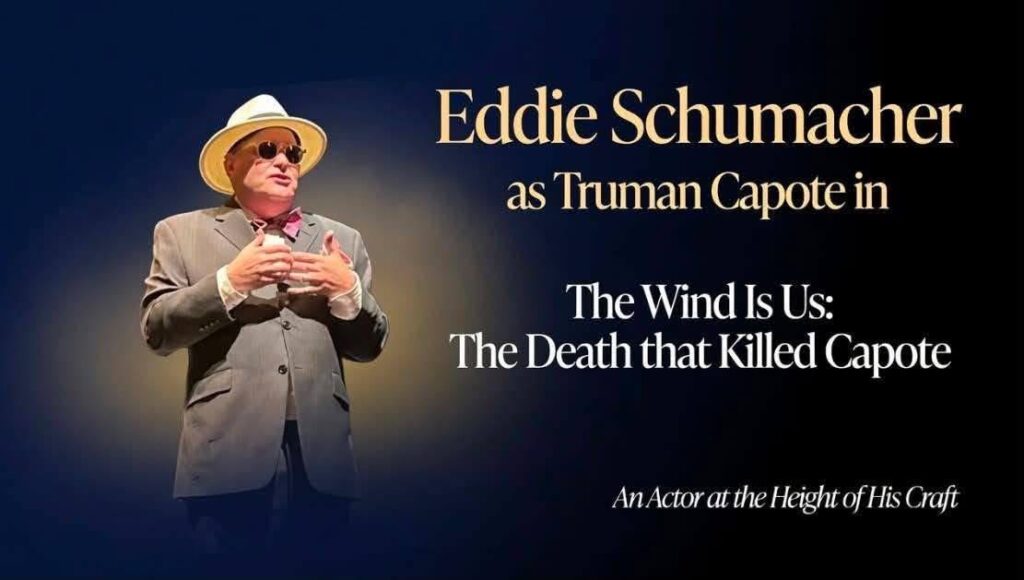
Truman Capote lived as though the world were his stage—glittering, performative, and always one breath away from collapse. In The Wind Is Us: The Death that Killed Capote, playwright Mike Broemmel and actor Eddie Schumacher resurrect that complicated figure with haunting intimacy. Schumacher, who earned the Best Actor Award at the United Solo Theatre Festival Off‑Broadway for this role, channels Capote’s lilting voice, brittle charm, and slow unraveling with uncanny precision. The result is a portrait of a man who dazzled America with Breakfast at Tiffany’s and reshaped nonfiction with In Cold Blood yet ultimately found himself undone by the very society he longed to captivate.
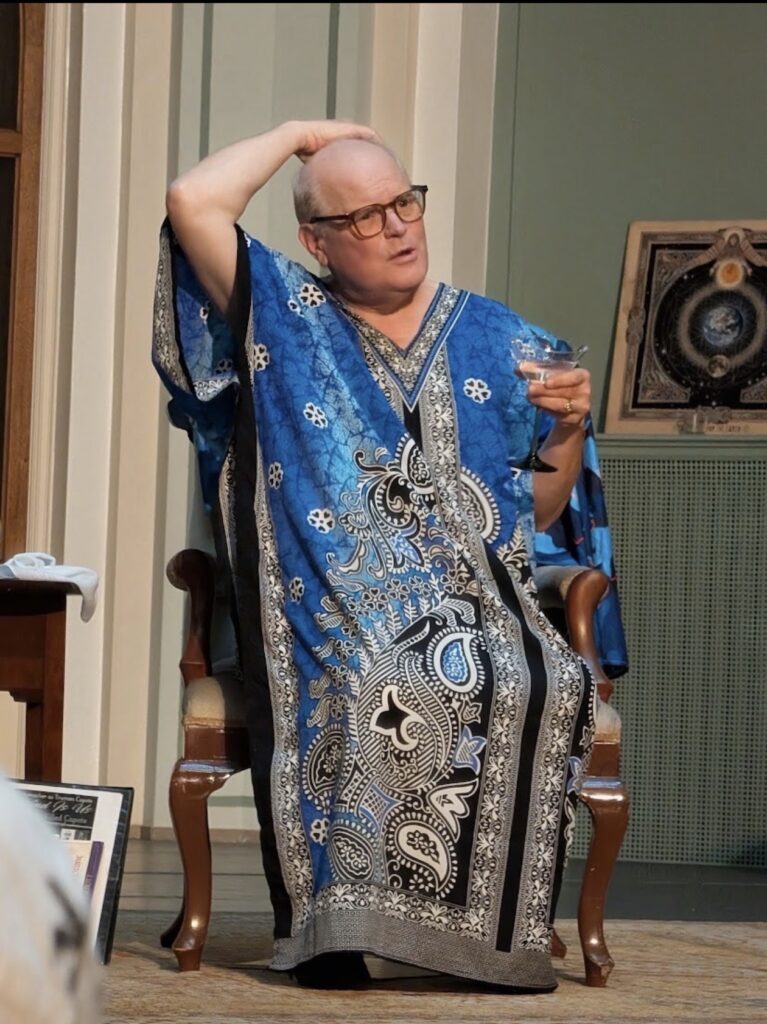
The performance was presented as a one‑night‑only event within the Lavender Hill Cultural District Theatre Festival, an emerging showcase devoted to queer‑centered storytelling and new theatrical work across Colorado. The festival brings together solo performers, playwrights, and small companies for a concentrated burst of intimate, boundary‑pushing theatre. Earlier in the week, I attended Mike Broemmel’s I’m Harvey Milk, another standout of the festival, and my full review of that production is available now at curtain‑up.com. Within this vibrant context, The Wind Is Us felt especially fitting—an exploration of one of America’s most iconic queer writers staged in a festival committed to amplifying voices that have shaped and challenged the cultural landscape. Its brief, single‑evening engagement only heightened its impact, giving the night the charged sense of something rare and fleeting.
Playwright Mike Broemmel has become one of Colorado’s most prolific voices in biographical theatre, gravitating toward figures whose lives straddle brilliance, controversy, and cultural impact. His work often blends journalistic clarity with a storyteller’s instinct for emotional texture—a style evident in The Wind Is Us. Here, Broemmel approaches Truman Capote not as a distant literary icon but as a man unraveling in real time, stitching together moments of fame, betrayal, addiction, and longing with a kind of quiet, poetic precision. Having recently seen Broemmel’s I’m Harvey Milk at the same festival, it’s clear that he is drawn to queer historical figures whose legacies are both luminous and fraught. The Wind Is Us continues that exploration, offering a script that gives Eddie Schumacher ample room to inhabit Capote’s contradictions while grounding the performance in a narrative that feels both intimate and unflinching.
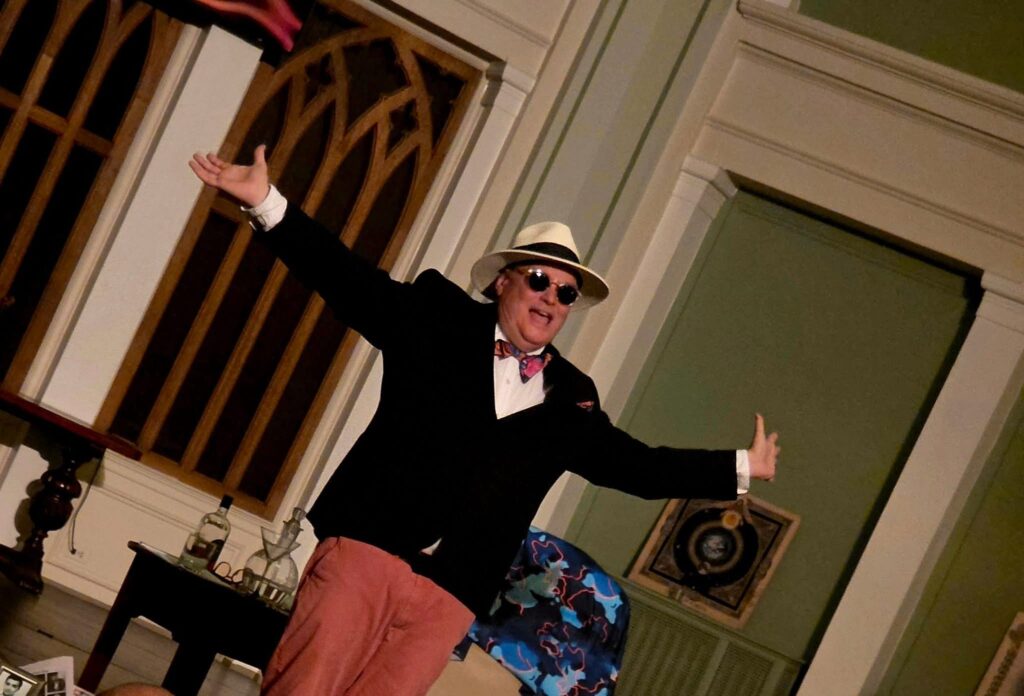
As Capote, Eddie Schumacher delivers a performance of remarkable depth and precision—one that fully justifies the Best Actor Award he received at the United Solo Theatre Festival Off‑Broadway for this role. Schumacher doesn’t merely imitate Capote’s famous drawl or his fluttering mannerisms; he inhabits them with a kind of lived‑in authenticity that makes the portrayal feel both intimate and unsettling. His command of Capote’s rhythms, the sly humor, the sudden flashes of bitterness, the drifting melancholy—creates a portrait that is as emotionally layered as it is technically exacting. Over the course of the evening, Schumacher guides the audience through Capote’s charm, ego, vulnerability, and unraveling with a brilliance that never feels forced. It’s a performance shaped by years of inhabiting the role, and it shows: every gesture, every pause, every brittle laugh lands with the weight of a man who once dazzled the world and then watched it slip away.
The staging at the Althea Center was intentionally minimal, offering little more than a table, a chair, and a mid‑show costume change to mark the shift between acts. It’s a spare environment that places the full weight of the evening on Schumacher’s performance and Broemmel’s text. The lighting, essentially non‑existent, provides no atmospheric support or sculpting of the space, leaving the room visually static throughout. While such simplicity can sometimes underscore the intimacy of a solo piece, here it contributes to a sense of incompleteness that the production would benefit from a more thoughtfully realized physical world to match the strength of the material and the performer.
What the production lacks, however, is the presence of a clearly credited director—a guiding hand to shape the arc of the evening and refine its transitions. Solo shows, even those anchored by a performer as gifted as Schumacher and written with Broemmel’s sensitivity, benefit from an outside eye to balance pacing, sharpen focus, and ensure that every moment serves the larger narrative. Without that influence, The Wind Is Us occasionally feels more like an extraordinary performance than a fully realized piece of theatre. Schumacher’s talent is undeniable—his award‑winning portrayal proves that, but even the most accomplished solo artists thrive when partnered with a director who can help sculpt the work’s emotional and structural contours. The material and the performance are strong; a dedicated director could elevate them into something truly unforgettable.
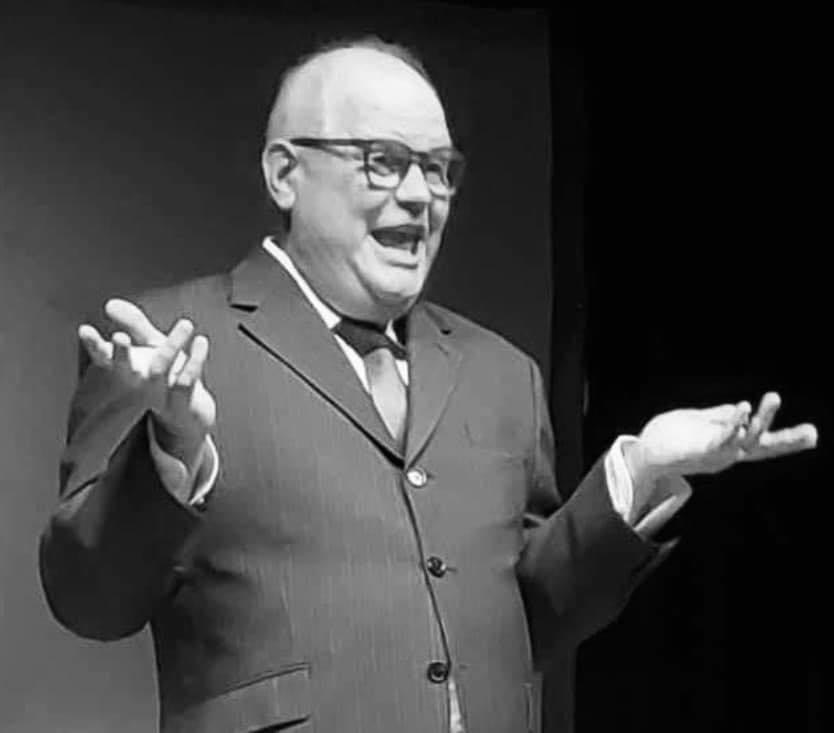
In the end, The Wind Is Us: The Death that Killed Capote stands as a compelling addition to the Lavender Hill Cultural District Theatre Festival, a celebration of queer voices whose stories continue to shape our cultural imagination. Truman Capote remains one of the most fascinating—and confounding—figures in American letters, a man whose brilliance and self‑destruction were forever intertwined. Broemmel’s script and Schumacher’s award‑winning performance capture that tension with clarity and emotional force, offering an evening that is both intimate and unsettling. Even with its minimalist staging and the absence of a guiding directorial hand, the production succeeds in reminding us why Capote’s life and work still matter: he was a writer who exposed the beauty and the ache of being human, and this festival’s commitment to elevating such voices ensures that his story continues to resonate.