
Posted by Curtain Up! on Oct 14, 2026
Review: Sweeney Todd, The Demon Barber of Fleet Street | Platte Valley Theatre Arts | The Armory Performing Arts Center, Brighton Co | Curtain Up | Eric Fitzgerald
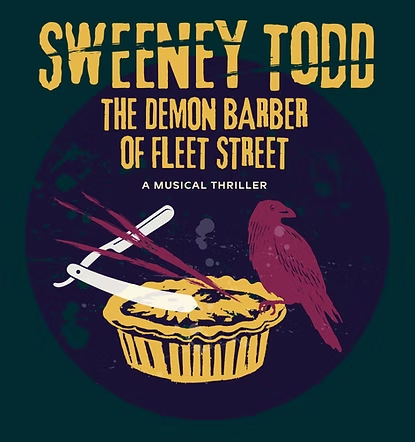
There are great musicals, and then there is Sweeney Todd – Stephen Sondheim’s dark, thrilling masterpiece that demands nearly everything from the artists brave enough to stage it. Platte Valley Theatre Arts presents Sweeney Todd: The Demon Barber of Fleet Street at the Armory Performing Arts Center in Brighton, and it’s no small undertaking. Often considered Stephen Sondheim’s greatest score, the musical demands exceptional musicianship, storytelling, and emotional depth from everyone involved. Co-directed by Kelly Van Oosbree (also the choreographer) and Victoria Holloway, this production embraces the show’s dark humor, soaring music, and underlying tragedy, bringing new life to a musical that remains one of American theatre’s most celebrated achievements. Originally opening on Broadway in 1979, Sweeney Todd continues to captivate audiences with its chilling tale of revenge, obsession, and the cost of losing one’s humanity.
What becomes clear early on is that this production isn’t interested in simply dusting off a classic—it’s intent on examining it. Van Oosbree and Holloway approach Sweeney Todd with a steady, deliberate hand, foregrounding the moral grayness that saturates every choice these characters make. Their staging sharpens the show’s darker edges without tipping into theatrics, letting the story’s weight accumulate slowly and intentionally. In their view, the piece isn’t just a revenge engine; it’s a study in how conviction corrodes, how a person can lose the thread of their own humanity one justified step at a time.
The score gives no one much room to hide, and this cast meets its demands with a clarity that fits the material. Sweeney Todd is written with a controlled, pressurized intensity, and Jeremy Rill as Todd keeps that line steady without losing weight or intention. Mrs. Lovett, played by Sarah Forman, needs a different skill set—quick turns, crisp diction, and the ability to ride the score’s constant shifts—and she handles those demands with a sure hand. Their work sets the tone for the rest of the company, establishing a tight, musical baseline.
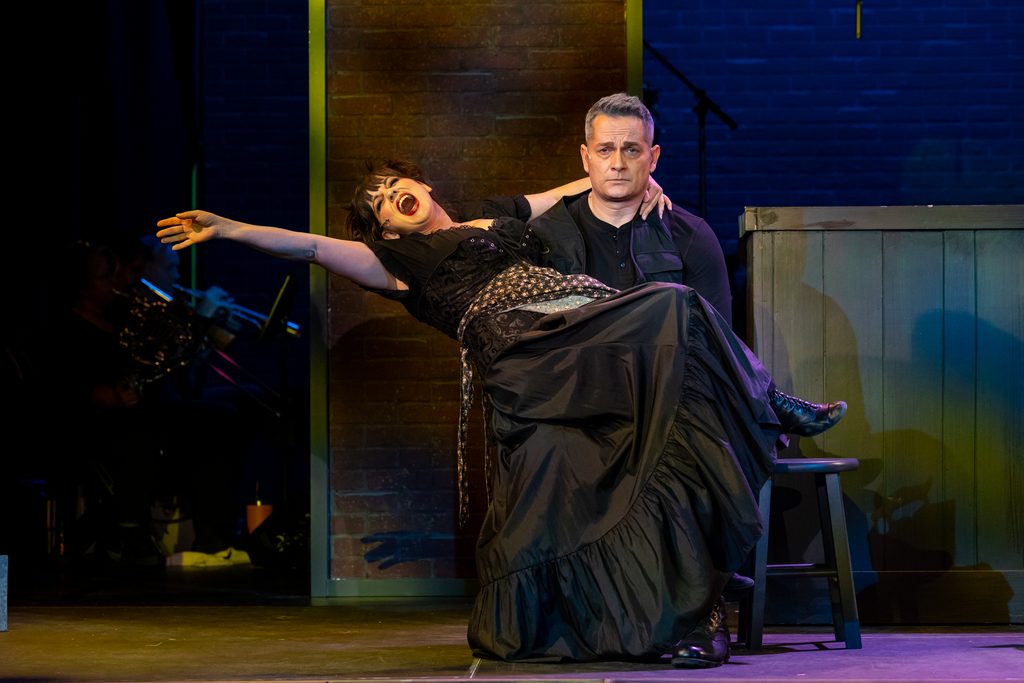
Sarah Forman and Jeremy Rill | Photography Credit: RDGPhotography
The supporting roles carry just as much responsibility. Anthony Hope, played by Marshall Corzette, needs an open, earnest sound that can cut through the darker textures around him, and he delivers it without tipping into sentimentality. Johanna, played by Anne Vonick, has music that’s deceptively exposed—long, sustained lines that demand control more than decoration—and she keeps those phrases centered. Chase Ralston’s Tobias Ragg brings warmth to a role perched right on the edge of innocence, and his vocal choices reflect that balance. Maggie Lamb’s Beggar Woman, whose music is fragmented and intentionally roughened, lands with purpose; her presence threads tension through the score every time she appears.
Brian Merz‑Hutchinson gives Judge Turpin a firm, imposing edge without slipping into caricature, while Ryan Kyle Witt’s Beadle matches him with a crisp, controlled precision. Brandon Warren’s Adolfo Pirelli adds a sharp jolt of energy to the evening, leaning into the character’s flair without overwhelming the ensemble. Together, these performances round out the production with a steady mix of clarity, texture, and intention.
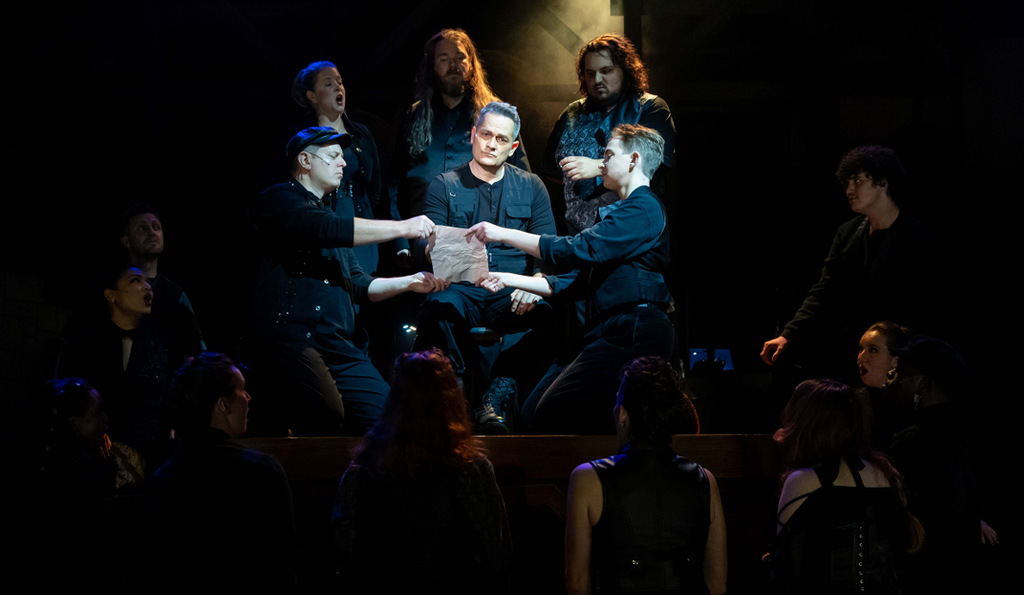
Jeremy Rill (Center) and the cast of Sweeney | Photography Credit: RDGPhotography
The ensemble adds the final layer the production needs, shaping the overall mood with a consistency that keeps the show grounded from start to finish. They give the piece its atmosphere—those small shifts in tone and presence that make the world of the play feel lived‑in rather than decorative. Vocally, they’re reliably strong, blending with a cohesion that supports the leads and fills out the larger moments without ever overwhelming them.
The orchestra deserves its own spotlight—sixteen musicians under Bonnie Simcox, who not only leads the ensemble but also shapes the production’s musical direction. It’s an impressive group, the kind that makes you pause and wonder how a regional theatre company assembles talent at this level. The answer, clearly, is thank goodness they do. Simcox keeps the players unified and alert, giving the score the kind of structure and drive it needs. Her work does exactly what a good music director should: support the singers, sharpen the storytelling, and anchor the evening with a sound that feels both intentional and fully realized.
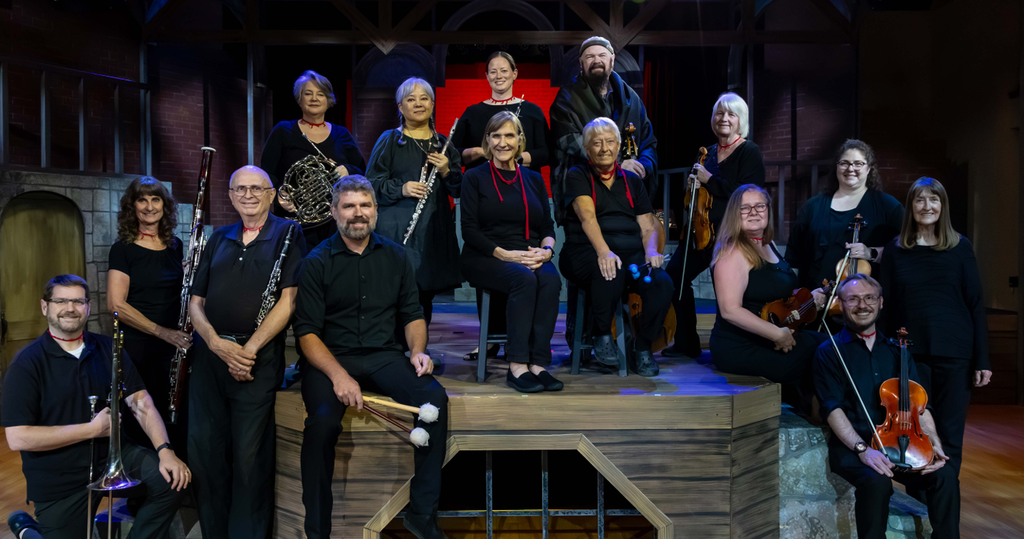
The magical orchestra of Sweeney Todd | RDGPhotography
The design team supports the production with thoughtful, well-calibrated work. Brett Maughan’s lighting gives the evening its shape, carving out space and tension without ever overwhelming the stage. Nicole Harrison’s costumes fit the world cleanly, grounded in character rather than decoration. The scenic design by Jeff Rusnak and Kelly Van Oosbree is serviceable in the best way—flexible, unfussy, and able to shift quickly as the story demands.
Van Oosbree and Holloway bring a clear, disciplined touch to the production, shaping the evening with intention rather than excess. At the center is Rill, giving a landmark performance—controlled, grounded, and fully in command of the role’s weight. Forman matches that level of craft, delivering work that’s precise and deeply considered, the kind of performance that sharpens every scene she’s in. Together, they anchor the production with a clarity that strengthens the entire ensemble. It’s the kind of work that reminds you of why Platte Valley Theatre Arts keeps taking big swings: they know how to deliver. It’s well worth a trip to Brighton this weekend, assuming there are any tickets left.
For Information and Tickets: https://www.plattevalleytheatrearts.org/sweeney-todd