
Posted by Curtain Up! on Oct 14, 2026
Review: The Hatmaker’s Wife | Firehouse Theater Company | John Hand Theater, Denver, CO | Curtain Up | Eric Fitzgerald

Firehouse Theater Company opens its season with The Hatmaker’s Wife, written by Lauren Yee and directed by Colby Bleicher, and the production arrives with calm, unfussy confidence. Bleicher keeps the tone steady and grounded, letting the actors carry the evening rather than layering on extra flourish. The ensemble meets the material with an easy warmth, giving Yee’s off‑center humor and strong emotional beats a clear, approachable shape right from the start.
The play begins as a young woman, identified as Voice (Jordann Zbylski), settles into a worn, slightly off‑kilter house with her boyfriend Gabe (Jaylin Wiese), hoping for an uncomplicated fresh start. That plan wobbles when the Wall (Corinne Landy) quite literally begins offering her pages from a tale about the home’s former occupants: Hetchman (Verl Hite), a hatmaker dug deep into his own habits, and Hetchman’s Wife (Dia Kline), who once lived in the same rooms. As Voice reads, she follows Hetchman’s Wife on her quiet quest to copy her husband’s cherished hat, a journey that reveals how little attention Hetchman pays to anything beyond his own routines.
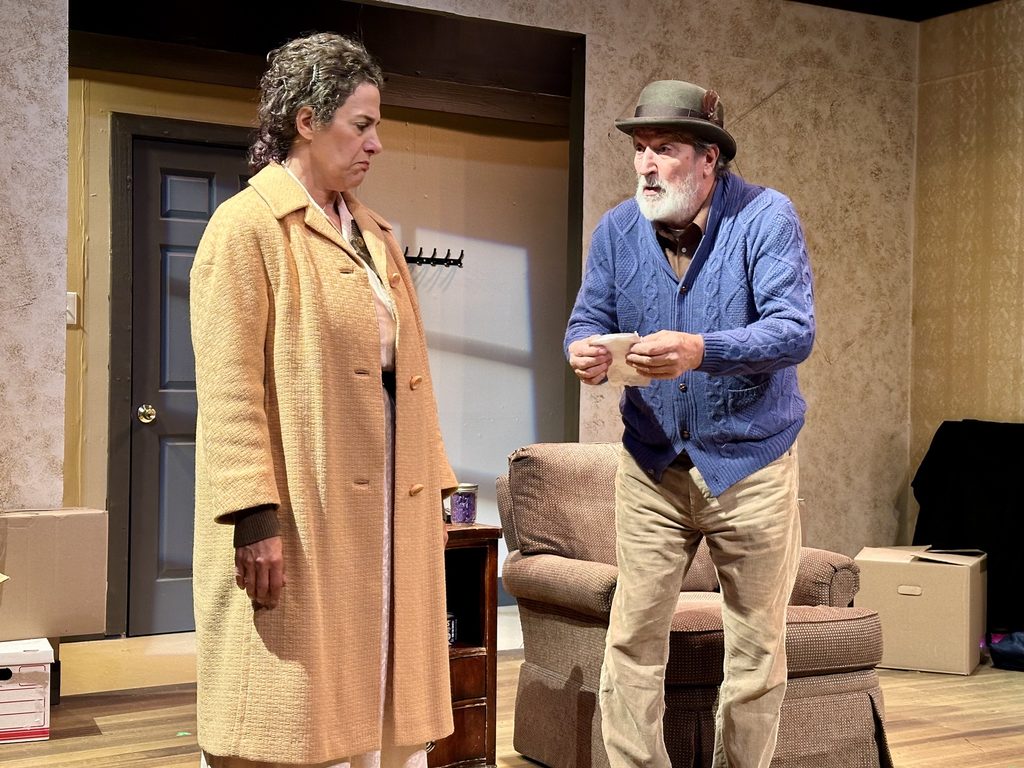
Dia Kline and Verl Hite | Photography credit: Helen Hand
Verl Hite, a veteran presence on Denver stages, gives The Hatmaker’s Wife its immediate center of gravity. His Hetchman arrives with a wry, almost impish looseness—suggested in an early bit of physical business that’s part shuffle, part gesture, part private joke—before the role deepens into something far more affecting. By the play’s end, Hite lets the character’s buried ache surface with a quiet, unguarded emotional clarity, anchoring the production’s most resonant moments.
Dia Kline, a recent Henry Award winner, plays Hetchman’s wife and carries a quiet undercurrent of hurt that never tips into melodrama—more a steady, lived-in sense of being overlooked than outright rejection—grounding the role with a steady, assured performance. Bruce Laks, as Meckel, Hetchman’s only friend, is the one person who regularly crosses Hetchman’s orbit beyond the household, adding welcome texture to the play’s world.
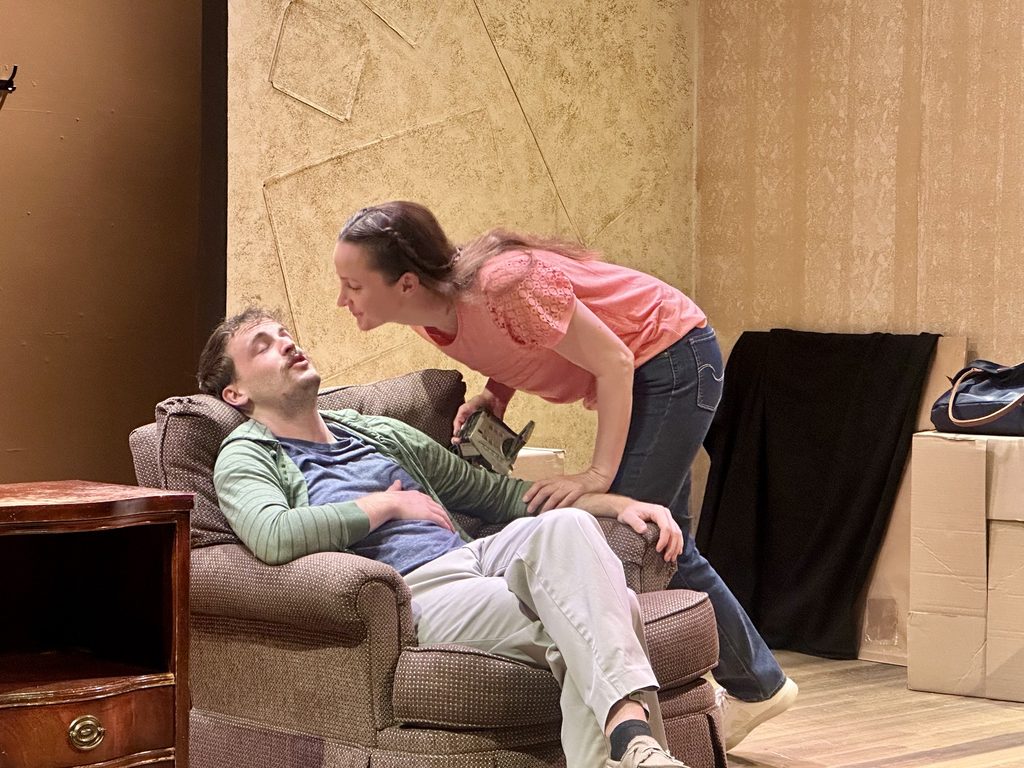
Jaylin Wiese as Gabe and Jordann Zbylski as Voice | Photography credit: Helen Hand
Jordann Zbylski, as Voice and making her Firehouse debut, threads welcome clarity through the play’s shifting timelines; her calm, matter-of-fact delivery of the pages she receives about the home’s former inhabitants helps orient the audience without slowing the momentum. Jaylin Wiese, playing her boyfriend Gabe and stepping into the role of the Golem—a steady, inevitable force rather than anything overtly ominous—brings fresh, confident energy to both parts. And Corinne Landy, as Wall, offers a grounded, gently humorous presence that keeps the play’s magical elements tethered to something warm and human.
Colby Bleicher, making her directorial debut with The Hatmaker’s Wife, shapes the production with a clear, confident hand. Her approach stays rooted in the story’s emotional logic rather than pushing the piece into overt whimsy, letting the script’s magical elements emerge naturally from the characters’ experiences. The result is direction that feels focused, steady, and fully in tune with the play’s shifting tones, integrating every component the script offers without overembellishing.
The physical production makes smart, economical use of the intimate playing space; though no scenic designer is credited, Jeff Jesmer’s set construction shapes the environment with intentional simplicity rather than bareness, giving the actors room to let the story breathe. Rachel Herring‑Luna’s costumes are thoughtfully chosen and unobtrusive, offering clean visual cues without ever pulling focus. Cheri Bauman’s lighting design provides gentle atmospheric shifts that help guide the audience through the play’s tonal turns. Madison Kuebler’s sound design, including musical interludes, adds subtle texture without overwhelming the action, and Beki Pineda’s props add meaningful details that round out the play’s world.
The Hatmaker’s Wife ultimately lands as a steady, thoughtfully assembled production—well acted, clearly directed, and engaging in its own gentle way. It’s not a piece that aims to shake the earth beneath you; its impact is lighter and more gently engaging than life-altering, offering a warm rather than weighty evening. As an opener for Firehouse Theater Company’s 2026–2027 season, it’s a confident, appealing start, and it runs through October 25 at the John Hand Theater.